
Tonewoods
How we select and pair the woods that make a guitar a voice. Tap tone first. Visual character second.
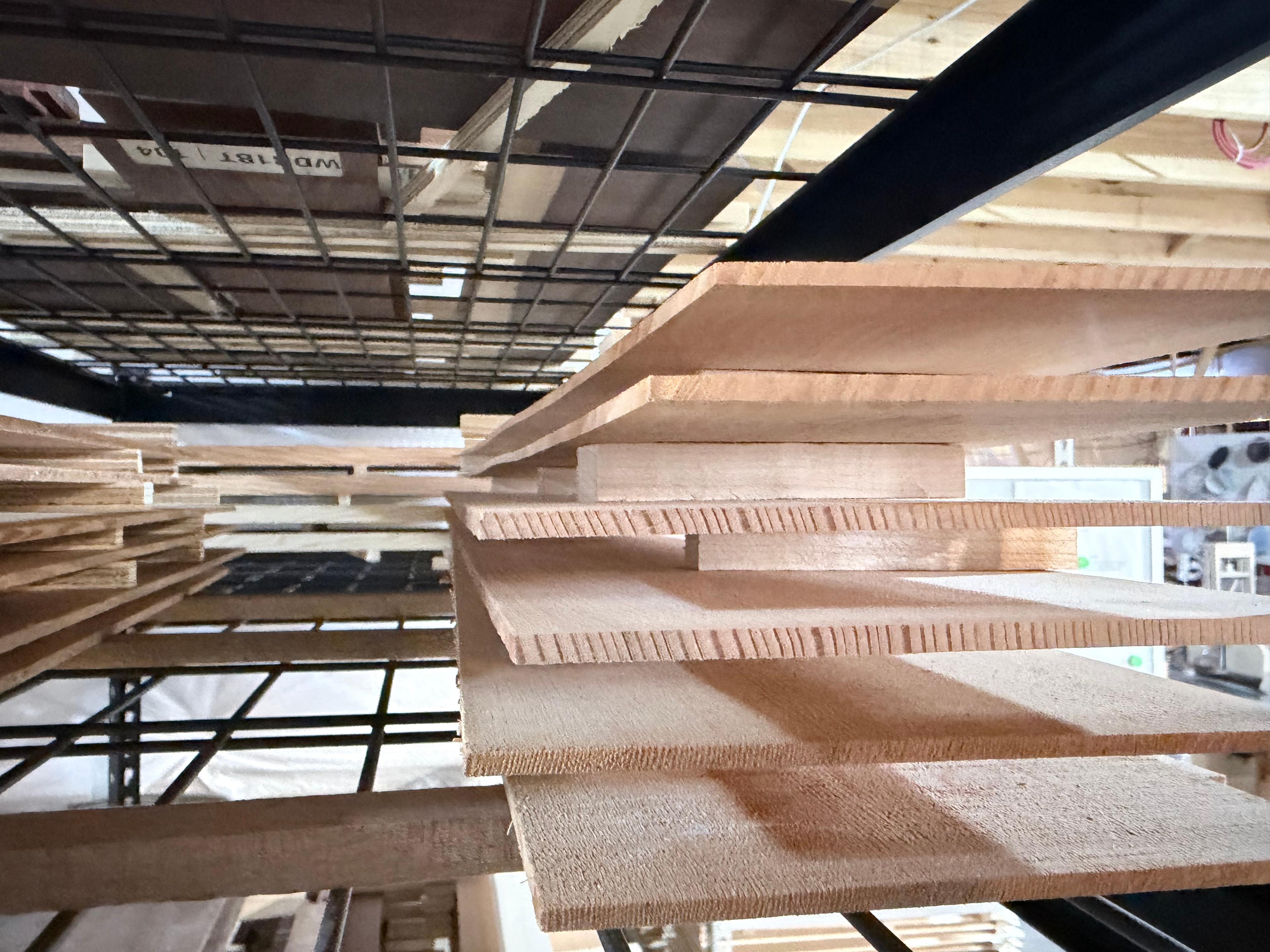
Selection Philosophy
Every tonewood gets tap-tuned and flex-tested before visual evaluation. Consistent grain and density beat dramatic figure. Highly figured wood introduces acoustic unpredictability and ages less consistently than ribbon-grain or straight-grain stock. Plates that fail the tap test are rejected regardless of how they photograph.
Sapwood is avoided — density difference, stability difference, finishing inconsistency. Quartersawn stock is preferred for neck and brace material. The criterion is always: what does this piece of wood actually sound like and how predictably will it age?
Top Woods
Ranked, top to bottom, by stiffness-to-weight.
Back & Sides
The character the top is paired against. We keep an inventory wide enough to match a build to a player’s sound, not the other way around.
Neck Woods
Stability and carvability matter more here than tone — the neck is along for the ride, not driving the voice.
Fingerboard & Bridge Woods
The same three woods serve both roles — dense, hard, and stable under string tension.
Tonal Pairing
Four interactions you can predict before the first cut.
Body shape compounds these choices. A parlor body concentrates and focuses tonal character — bracing decisions have outsized effect on a small body. A 12-fret body join drives the bridge closer to the lower-bout center, where the top is most compliant: fuller bass, more complex bloom, vibrating area more evenly distributed both sides of the bridge.
Forward shifted X bracing and a 12-fret join are acoustically aligned. Both point toward maximum lower-bout vibration. When we choose them together, we’re stacking the deck on purpose.
Build Your Tone
Pick a top, a back & sides wood, a body, and a scale length, and we’ll describe the guitar they’d make together. Not a substitute for playing one — a starting point for a conversation.